


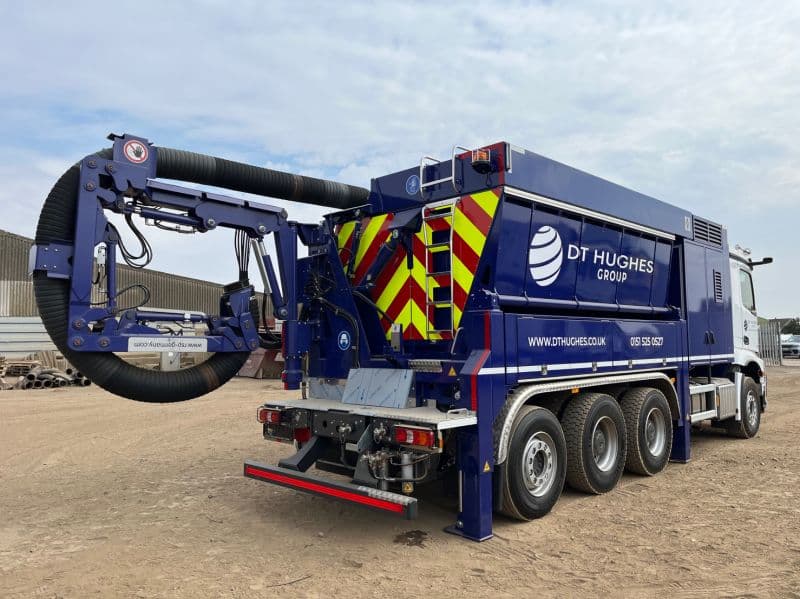
What Is Vacuum Excavation and Why Is It Replacing Traditional Digging in Cities Like Liverpool?
Vacuum excavation, also known as suction excavation, is a method of digging that uses high pressure air or water combined with a powerful suction system to break up and remove soil without the need for mechanical digging tools. It is faster, significantly safer, and far less likely to damage buried utilities than traditional excavation methods. Across construction and utility maintenance sites throughout the UK, vacuum excavation is increasingly becoming the method of choice wherever precision and safety cannot be compromised.
How Does Vacuum Excavation Work?
A vacuum excavator uses one of two methods to loosen the ground. Air excavation uses a high pressure jet of compressed air to break up the soil, while hydro excavation uses pressurised water to achieve the same result. Once the material is loosened it is immediately drawn up through a large suction hose into a debris tank on the vehicle, leaving a clean, precise excavation with minimal disturbance to the surrounding area.
The result is a controlled, accurate dig that can work safely around live cables, gas pipes, water mains, and other buried services that traditional mechanical excavation would put at serious risk of damage.
DT Hughes Group operates vacuum excavators with experienced operators as part of its plant and resource hire fleet, serving construction firms, utility companies, and civil engineering contractors across Liverpool, Merseyside, Wirral, and North Wales. With over 40 years of experience in construction and utility maintenance across the region, DT Hughes brings a level of operational knowledge to vacuum excavation work that goes well beyond simply providing the equipment.
Why Is Vacuum Excavation Safer Than Traditional Digging?
Traditional mechanical excavation using JCBs, excavators, or hand digging carries a significant risk of striking buried utilities. The consequences of hitting a live electricity cable, a gas main, or a water pipe can be severe. At best it means an unplanned service outage and a costly repair. At worst it is a serious safety incident with potential for injury or fatality.
Vacuum excavation removes that risk. Because the method uses air or water rather than metal cutting tools, it cannot sever a cable or rupture a pipe in the way mechanical digging can. Operatives can expose buried services with precision, confirm their exact position and depth, and work safely around them throughout the excavation process.
This matters enormously for utility maintenance work. DT Hughes Group is a NERS authorised contractor with long-standing framework agreements with SP Energy Networks for Distribution Underground Cable Works up to and including 33kV across the Merseyside District. Operating safely around live underground infrastructure is not a theoretical concern for DT Hughes. It is a daily operational reality, and vacuum excavation is one of the tools that makes that possible.
When Should You Use Vacuum Excavation Instead of Traditional Digging?
Vacuum excavation is not always the right tool for every job, but there are specific situations where it is clearly the better choice and in some cases the only responsible one.
It is the right choice when working near known or suspected buried services. Any excavation in an area where underground cables, pipes, or ducts are present should involve vacuum excavation to expose and verify their position before any mechanical digging takes place.
It is the right choice in confined or sensitive environments. Urban settings, busy streets, and sites close to existing structures benefit from the precision and reduced ground disturbance that vacuum excavation provides.
It is the right choice when speed of reinstatement matters. Because vacuum excavation removes material cleanly and deposits it directly into the debris tank, the excavated material can in some cases be reused for backfill, reducing waste and speeding up the reinstatement process.
It is the right choice when working around live utilities. As a NERS authorised business that maintains and upgrades the electric network across Merseyside and Wirral, DT Hughes understands better than most the risk that comes with working around energised underground infrastructure. Vacuum excavation is a core part of working safely in that environment.
What Is the Difference Between Air Excavation and Hydro Excavation?
Both methods achieve the same end result but work in slightly different ways and suit different ground conditions.
Air excavation uses compressed air to break up the soil. It is particularly effective in dry or loose ground conditions and is often preferred in situations where introducing water to the excavation could be problematic, such as when working close to electrical infrastructure or in areas with limited drainage.
Hydro excavation uses pressurised water to cut through the ground. It is highly effective in harder or more compacted soils where air alone may not be sufficient to break up the material efficiently. It does introduce water to the excavation, which needs to be managed as part of the overall site plan.
The right choice between the two depends on the ground conditions, the nature of the buried services nearby, and the specific requirements of the project. DT Hughes operators have direct experience of both methods across a wide range of site environments throughout the Liverpool City Region and wider North West, and can advise on the most appropriate approach for your specific situation.
How Does Vacuum Excavation Compare to Traditional Digging on Cost and Time?
The day rate for a suction excavator with an experienced operator is higher than for a standard mechanical excavator. That comparison does not tell the whole story.
When you factor in the cost of a utility strike, which can run to tens of thousands of pounds in repair costs, service restoration, project delays, and potential liability, the economics shift significantly. Vacuum excavation is an investment in risk management as much as it is a method of digging.
On time, vacuum excavation is often faster than traditional methods in the situations where it is most needed. Exposing buried services manually or with trial holes using hand tools is slow and imprecise. Vacuum excavation achieves the same result more quickly, more accurately, and with less disruption to the surrounding area.
For contractors and utility companies working to tight programmes across Liverpool and the North West, that combination of speed, precision, and risk reduction makes vacuum excavation a genuinely cost-effective choice on the right jobs.
Vacuum Excavation and Plant Hire in Liverpool and the North West
DT Hughes Group offers vacuum excavator hire with experienced operators as part of a comprehensive plant and resource hire service covering Liverpool, Merseyside, Wirral, Chester, and North Wales. The plant hire fleet also includes JCB machinery with operative hire, HIAB cranes, and mini excavators, giving contractors access to a full range of equipment and trained operators from a single, established provider.
Every piece of equipment in the DT Hughes fleet is well-maintained and every operator is trained and experienced in their specific area. The commercial garage facility operated by DT Hughes ensures that the fleet is kept to the standard required for reliable, safe operation on every job.
Whether you need a vacuum excavator for a single day's investigation work or ongoing support across a longer programme of utility or civil engineering works, DT Hughes can provide a flexible, responsive service. Get in touch to discuss your requirements.
Frequently Asked Questions
Vacuum excavation is used to safely expose and excavate around buried utilities including electricity cables, gas pipes, and water mains without the risk of damage associated with mechanical digging. It is widely used in utility maintenance, civil engineering, and construction projects where precision is essential and the consequences of a utility strike cannot be accepted.
In situations involving buried services or confined environments, vacuum excavation is typically faster than manual exposure methods and significantly safer than mechanical digging. The ability to remove material cleanly and precisely without risk of utility damage means work can progress without the delays and costs associated with an unplanned utility strike.
Suction excavation and vacuum excavation refer to the same method. Both terms describe the process of using high pressure air or water to break up soil combined with powerful suction to remove it. The terms are used interchangeably across the construction and utilities industry in the UK.
Vacuum excavation should be used whenever excavation is taking place near known or suspected buried services, in confined or sensitive environments, or in any situation where a utility strike would carry serious safety or financial consequences. It is particularly important on utility maintenance, infrastructure, and civil engineering projects in urban environments.
DT Hughes Group provides vacuum excavator hire with experienced operators across Liverpool, Merseyside, Wirral, Chester, and North Wales. As part of a comprehensive plant and resource hire service that includes JCB machinery, HIAB cranes, and mini excavators, DT Hughes offers flexible hire solutions for construction, utility, and civil engineering projects of any scale.
More from the blog

Groundworker Jobs Liverpool: Career Guide | DT Hughes
Our guide covers what the role involves, pay, progression, and how to get into groundworking in the UK.
Groundworks Liverpool: What's Involved & When | DT Hughes
Our guide covers what groundworks include, when they happen, foundation types, and how to choose a local contractor.

House Extensions in Liverpool: What You Need to Know Before You Start
Planning a house extension in Liverpool? Find out what to consider before you start, from planning permission and costs to choosing the right builder for your project.