



Vacuum Excavation vs Traditional Digging: Which Should You Choose?
Compare vacuum excavation and traditional digging on safety, speed and cost, and find out which method is right for your site.
The choice between vacuum excavation and traditional digging comes down to one question: are there live services in the ground? Choose vacuum excavation near buried cables, gas or water, in tight spaces, or anywhere a strike would be dangerous or costly. Choose traditional digging for open ground with no services and high volumes of soil to move.
Vacuum Excavation vs Traditional Digging at a Glance
Vacuum excavation
- Risk of utility strike: very low, no cutting blade contacts services
- Best ground: congested sites, near buried services, confined spaces
- Speed: faster on congested or service-heavy sites
- Day rate: higher, specialist equipment
- Overall cost: often cheaper near services once strike risk is factored in
- Ground disturbance: minimal and precise
Traditional digging
- Risk of utility strike: higher, depends on operator care and plans
- Best ground: open ground, no services, large volumes
- Speed: faster on open ground with high soil volume
- Day rate: lower, standard plant
- Overall cost: cheaper on low-risk open ground
- Ground disturbance: greater, wider working area
New to the method? Our guide to what vacuum excavation is and how it works covers the basics. This article focuses on choosing between the two.
Is Vacuum Excavation Cheaper Than Traditional Digging?
Near live services, often yes. On day rate alone a vacuum excavator costs more than a standard excavator, so on open ground with nothing buried below, traditional digging is cheaper. The moment live utilities are present, the real cost driver isn't the day rate, it's the risk of a strike.
Hitting a gas main or electricity cable can run to tens of thousands of pounds in repairs, service restoration, project delays and liability, dwarfing any saving on plant hire. So the cost question reframes itself: vacuum excavation isn't a more expensive way to dig, it's a way to remove a low-probability, high-cost risk.
On open ground where that risk doesn't exist, you're paying for protection you don't need, and traditional digging is the economical choice.
Is Vacuum Excavation Faster Than Traditional Digging?
On service-heavy ground, yes, but the comparison people make is usually the wrong one. On open ground with high soil volume, a traditional excavator moves more material per hour and wins easily. On congested ground full of buried services the picture inverts, because the realistic alternative to vacuum excavation isn't fast mechanical digging, it's slow, careful hand digging and trial holes to expose each service without striking it.
Vacuum excavation does that exposure work faster and more precisely, then avoids the days of programme delay a strike would cause. Don't compare it to an unobstructed excavator on open ground; compare it to the cautious manual digging it actually replaces.
Vacuum Excavation or Traditional Digging: A Worked Example
Two jobs, both excavating to one metre.
Job A: a residential extension footing on a clear plot.
No utilities crossing the dig, plenty of room, several cubic metres of soil to remove. A mini excavator does this fastest and cheapest. Vacuum excavation here would be slower and dearer for no benefit, there's no risk to manage.
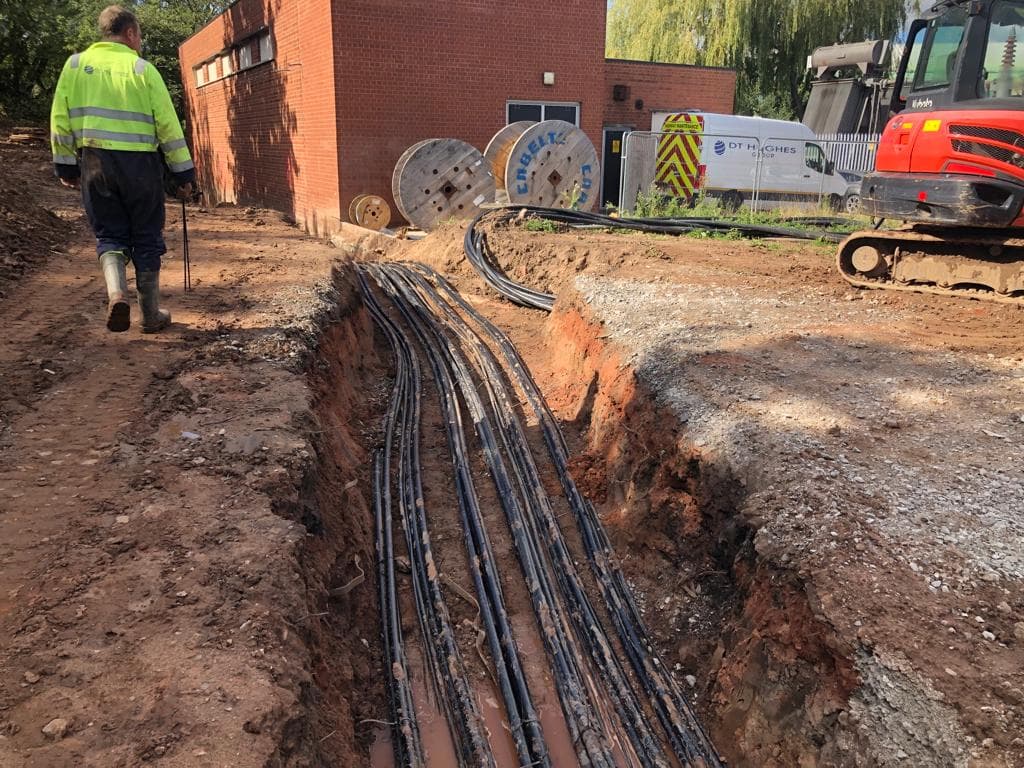
Job B: exposing a service connection on a busy footway with electricity, water and comms running through the dig.
The volume is small but the ground is full of live services and the working space is tight. Traditional digging means either a hand-dig crew working slowly and carefully, or accepting real strike risk with a machine. Vacuum excavation exposes the services cleanly, confirms their position and depth, and protects both the crew and the programme. Higher day rate, lower total cost and risk.
Same depth, opposite answers. The variable that decides it every time is what's in the ground, not the size of the hole.
Choosing a Vacuum Excavation Contractor in the North West
Choosing wrong is where strikes and overruns come from, and the wrong choice is usually the one driven by whatever kit is already on the yard. DT Hughes runs both methods, vacuum excavation with a trained operator alongside JCBs and mini excavators in our plant and resource hire fleet, so the recommendation follows the site rather than the equipment.
Working safely around live buried services is part of our day-to-day groundworks and utilities work across Liverpool, Merseyside, Wirral and North Wales, which is exactly the judgement this decision needs.
Contact DT Hughes today for more information and to discuss your needs.
Frequently Asked Questions
No. Vacuum excavation is the better choice near buried services or in confined spaces, but on large open ground with no utilities below, traditional digging is faster and more economical. The right method depends on the site, specifically whether live services are present and how much material needs moving.
The decision usually sits with the contractor or site manager, guided by utility plans, a site survey and the project's safety requirements. Where work takes place near live infrastructure, the asset owner or utility provider may specify vacuum excavation. An experienced provider will advise on the right method once they understand the ground conditions and what is buried below.
Yes, and many projects do. A common approach is to use vacuum excavation first to safely locate and expose buried services, then switch to traditional digging for the larger volume work once the ground around the utilities has been proven clear and safe.
Less so than traditional digging in most cases. Because the spoil is drawn straight into a holding tank rather than piled beside the dig, there is less mess and a smaller working area. That makes it well suited to busy footways, urban sites and locations where keeping disruption down matters.
More from the blog

Groundworker Jobs Liverpool: Career Guide | DT Hughes
Our guide covers what the role involves, pay, progression, and how to get into groundworking in the UK.
Groundworks Liverpool: What's Involved & When | DT Hughes
Our guide covers what groundworks include, when they happen, foundation types, and how to choose a local contractor.

House Extensions in Liverpool: What You Need to Know Before You Start
Planning a house extension in Liverpool? Find out what to consider before you start, from planning permission and costs to choosing the right builder for your project.