



What Training Do You Need to Work on the Electricity Network?
To work on the electricity network, you need site safety training such as a CSCS card or safety passport, a first aid certificate, proven trade skills such as cable jointing, and an authorisation from the network operator. Across Merseyside, North Wales and parts of Cheshire, that operator is SP Energy Networks (SPEN).
DT Hughes Group has worked on the electricity network across Merseyside and Wirral as a long-standing SP Energy Networks framework partner, and our electrical jointing team holds SPEN authorisations and ENW certifications for networks up to and including 33kV. This guide explains what training the network requires, what SPEN authorisations are, and how the authorisation process works.
What Qualifications Do You Need Before You Can Work on the Network?
The starting point is the law. The Electricity at Work Regulations 1989 say that nobody should carry out electrical work that needs technical knowledge or experience to prevent danger unless they have that knowledge and experience, or are properly supervised. Network operators turn that principle into a structured route, and the training needed builds in three layers.
The HSE's guidance on those regulations sets out what that competence means in practice: adequate knowledge of electricity, experience of electrical work, an understanding of the system being worked on and practical experience of that type of system, an understanding of the hazards and the precautions needed, and the ability to recognise at all times whether it is safe for work to continue.
The first layer is site entry. Most sites expect a CSCS card or an equivalent safety passport, and SPEN lists both a CSCS card or safety passport and a basic first aid certificate among the evidence it may ask for when someone applies for authorisation. Our guide to what a CSCS card is covers the card itself.
The second layer is trade competence. For jointers, that means being able to show competence on the specific joints and cable types you will work on, usually through a jointing competency assessment report (JCAR) and a practical skills assessment. The third layer is authorisation: written permission from the network operator to carry out named activities on its network.
What Are SPEN Authorisations?
SPEN authorisations are written permissions issued to individuals, allowing them to carry out specific activities, at specific voltage levels, on the SP Energy Networks distribution system. SPEN states that anyone completing contestable jointing work on its network needs authorisation. Holding the right trade skills is not enough on its own; the authorisation is what allows a skilled person to work on that particular network.
It helps to separate authorisation from accreditation. The National Electricity Registration Scheme (NERS) accredits companies to carry out contestable connection work, while authorisations are held by the individuals doing the work. DT Hughes Group holds NERS accreditation as a business, and our jointers hold their own SPEN authorisations; both are needed for the work we carry out on the network.
Does Your Employer or SPEN Issue the Authorisation?
It depends on how the work is set up. SPEN's Code of Practice for connection providers offers three options. Under the first, the connection provider works under its own safety management system and safety rules, which must be of an equivalent standard to SPEN's, and issues authorisations to its own employees and contractors, taking account of any network specific issues identified with SPEN. Under the second, the connection provider's staff work under SPEN's safety rules, and SPEN sets the competence requirements and issues the authorisations itself.
The third option is a transfer of control, where SPEN hands control of a specified part of its network to the connection provider for the duration of the work, and the provider works under its own safety rules. For someone starting out, the practical point is that authorisation usually follows your employer's arrangements, which is why joining an established network contractor is a practical route in.
How Do You Get SPEN Authorised?
SPEN's process is set out in its safety instruction SI-2, Safety Rules Training, Authorisation and Competence, and applications are made through an online authorisation request form. When applying, you need to state which activities you want to carry out and at what voltage level, for example HV jointing, mains jointing or service jointing. SPEN may ask for the following supporting evidence.
To apply for SPEN authorisation, you may be asked for the following evidence. Your CV and training records show your background and the training you have completed. A CSCS card or safety passport shows you meet site safety requirements, and a basic first aid certificate shows you can respond to an incident on site. Existing or previous authorisations from other network operators show experience that has already been assessed elsewhere. A current JCAR shows your competence on the range of joints and cable types you will work on. Where applicable, attendance at SP jointing retraining courses shows your skills match current SPEN jointing kits.
Anyone who has never held a ScottishPower authorisation, whose authorisation has expired, or who is asking for additional levels will need to attend an authorisation interview. All jointers also complete a trade test skills assessment, which covers live jointing and operating on SPEN systems. A compliance consultant then reviews the application and passes it to SPEN Compliance.
Former ScottishPower employees follow a slightly different route. They need to provide their previous personnel number and the authorisation categories they held, and depending on how long ago that was, they may need to attend a retraining course or complete a new JCAR assessment to bring them up to the standard of the current jointing kits.
What Do SPEN Authorisations Cover?
Authorisations are specific to both the activity and the voltage. Someone authorised for low voltage service jointing, for example, is not automatically authorised for high voltage work, and each additional level needs its own assessment. This is why applicants are asked to list exactly what they will be doing when they apply.
SPEN's own examples of the activities applicants specify include HV jointing, underground substation installation, mains jointing (AWP-04) and service jointing metered on site (AWP-05). Each describes a distinct type of work, and an applicant is authorised only for the activities and voltage levels they have been assessed for.
The full set of authorisation categories, and the limits attached to each, sits within SPEN's safety rules and instruction SI-2, which ScottishPower makes available through its training portal. Because these documents are updated over time, anyone checking a specific category should always work from the current version rather than an older copy found online.
Is There a SPEN Authorisation Course, and What Does It Cost?
There is no single SPEN authorisation course with one published price. Once authorisation is approved, the training request goes to SPEN's Technical Training team, and the applicant's company is emailed details of the courses required, which it then books through ScottishPower Training. Skills assessments and retraining on specific jointing kits are also arranged through SPEN's Technical Training team.
The cost therefore depends on the activities and voltage levels involved, and on how much training and assessment each person needs. Where SPEN authorises a connection provider's staff directly, its Code of Practice says the charges must be cost-reflective and that opportunities to be authorised should be available often enough.
What About Other Network Operators in the North West?
Each distribution network operator runs its own authorisation process, so the operator you need to be authorised by depends on where the work is. SP Energy Networks covers Merseyside, North Wales and parts of Cheshire, while Electricity North West (ENW) covers most of the rest of the North West of England, including Greater Manchester, Lancashire and Cumbria, but not the Liverpool area.
Contractors working across the region often need authorisations or certifications with more than one operator. Our jointing team holds both SPEN authorisations and ENW certifications, which lets us work across both networks. When someone who already holds authorisations elsewhere applies to SPEN, those existing authorisations form part of the evidence SPEN considers.
How DT Hughes Develops Its Electricity Network Teams
Our relationship with SP Energy Networks began in 2015. In November 2021 we began a multi-million pound contract with SPEN for distribution underground cable works, up to and including 33kV, across the Merseyside District, and today we hold framework agreements covering Merseyside and Wirral, with teams working on the low, high and extra high voltage underground network. Our electric network teams provide a 24/7, 365-day response, and our electrical jointing department has grown into an integral part of the business.
Developing that workforce is the role of the DT Hughes Training Academy, established in Aintree in October 2020. The Academy already delivers in-house training for our staff, including Emergency First Aid at Work. The next stage, which is still in development, is a dedicated training school for SP Energy Networks authorisations, designed to help build the skilled workforce the network needs to meet net zero targets.
If you would like to know more about the Academy and where it is heading, find out more about the DT Hughes Training Academy. For anything else, including working with us, get in touch with DT Hughes or take a look at current roles at DT Hughes.
Frequently Asked Questions
In most cases, yes. A CSCS card or an equivalent safety passport is expected on most construction and utility sites, and SPEN lists a CSCS card or safety passport among the supporting evidence it may request when someone applies for authorisation. The card shows you meet site safety requirements; it does not replace the trade assessment or the authorisation itself.
SPEN asks applicants for copies of existing and previous authorisations from other network operators, and its Code of Practice says it will take account of authorisations issued by other DNOs to minimise repeat assessments. You will still need to go through SPEN's process, but previous authorisations are part of the evidence considered.
In some cases, yes. Under SPEN's Code of Practice, a connection provider working under its own safety management system can issue authorisations to its own employees and contractors, provided its safety rules meet an equivalent standard to SPEN's. Alternatively, the provider's staff can work under SPEN's safety rules, in which case SPEN issues the authorisations directly.
A JCAR is a jointing competency assessment report. It records that a jointer has been assessed as competent on a particular range of joints and cable types. SPEN asks for a current JCAR covering the joints and cables you will work on as part of an authorisation application, alongside the trade test skills assessment.
No. NERS, the National Electricity Registration Scheme, accredits companies to carry out contestable connection work. SPEN authorisations are held by individuals and allow them to carry out specific activities at specific voltages on the SPEN network. A company doing this work typically needs NERS accreditation, and its people need the relevant authorisations.
More from the blog
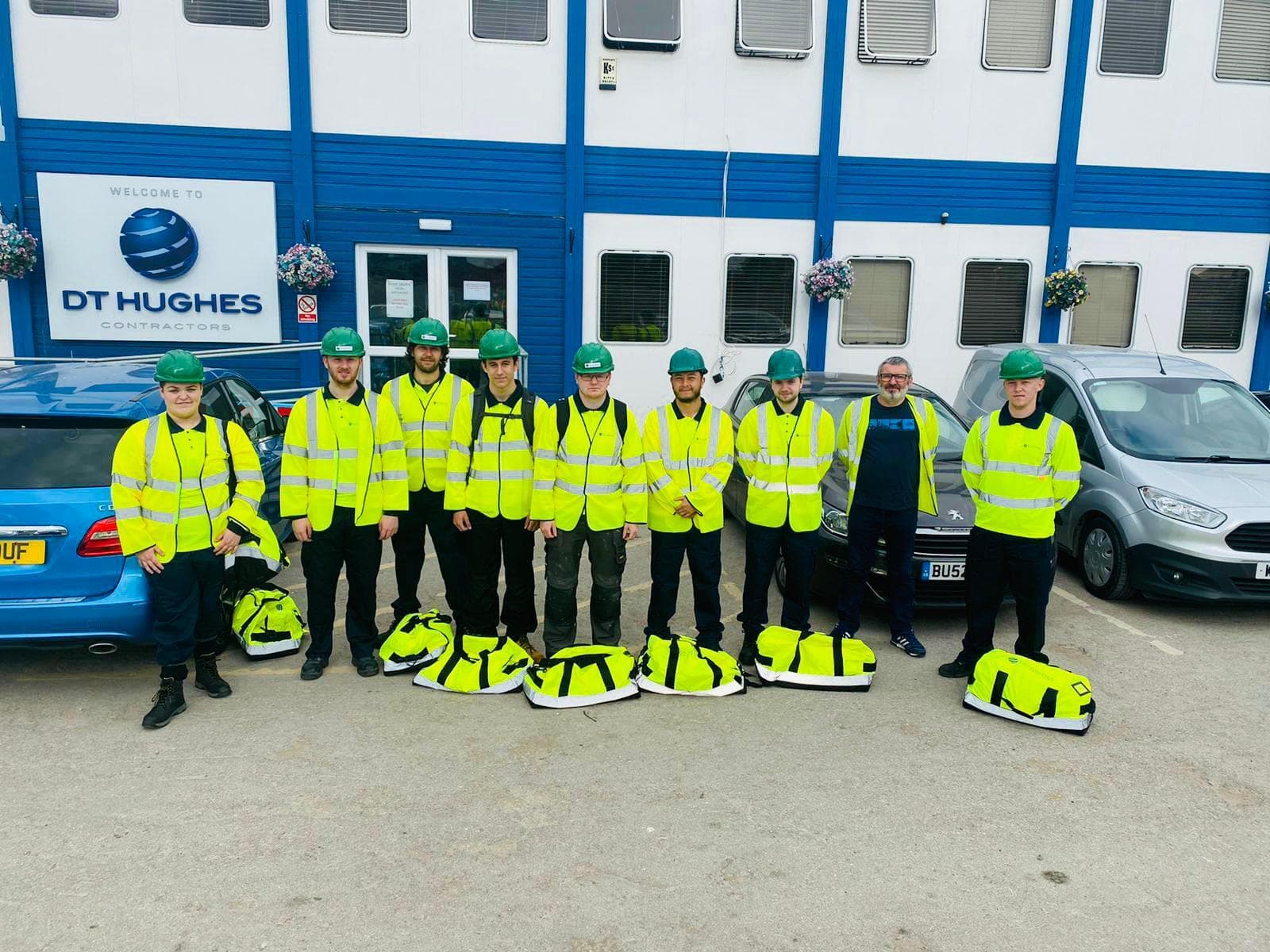
Groundworker Jobs Liverpool: Career Guide | DT Hughes
Our guide covers what the role involves, pay, progression, and how to get into groundworking in the UK.
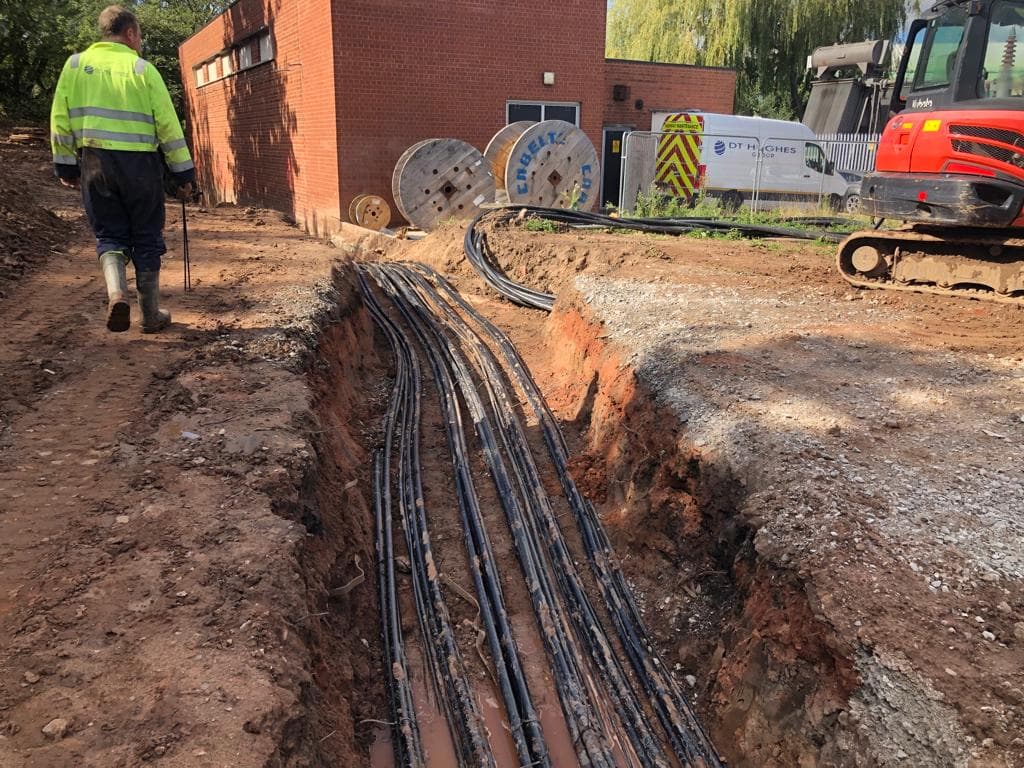
Groundworks Liverpool: What's Involved & When | DT Hughes
Our guide covers what groundworks include, when they happen, foundation types, and how to choose a local contractor.

House Extensions in Liverpool: What You Need to Know Before You Start
Planning a house extension in Liverpool? Find out what to consider before you start, from planning permission and costs to choosing the right builder for your project.